
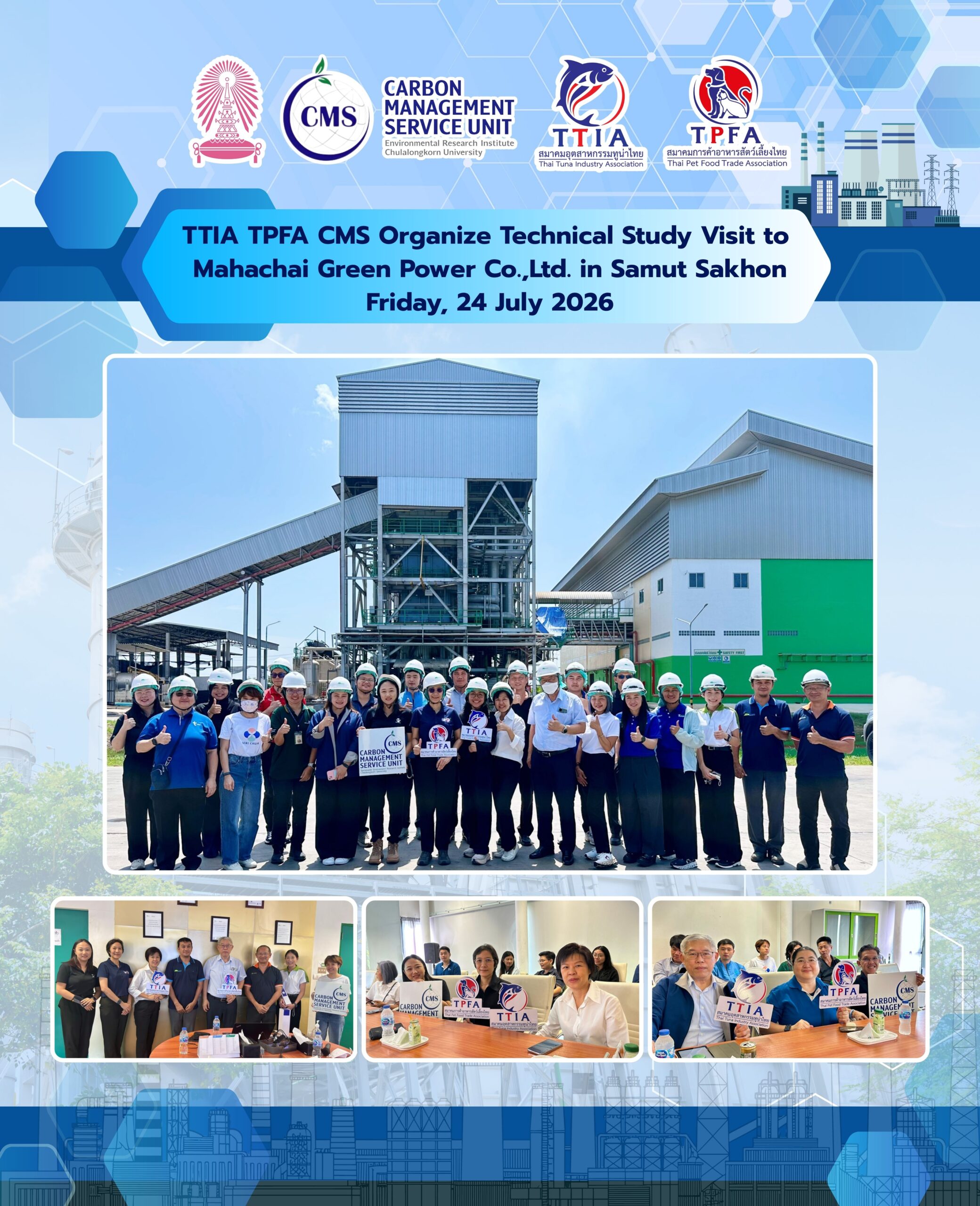
TTIA TPFA and CMS Organize Technical Study Visit to Mahachai Green Power
Friday, 24 July 2026 – The Thai Tuna Industry Association (TTIA) and the Thai Pet Food Trade Association (TPFA), in collaboration with the Carbon Management Service Unit (CMS), Environmental Research Institute, Chulalongkorn University, organized a technical study visit to Mahachai Green Power Co., Ltd. in Samut Sakhon Province.
The delegation was led by Mr. Chatree, TTIA Technical Committee Member, Ms. Napaporn, Treasurer, Ms. Supawadee and Ms. Lalitwadee, Technical Committee Members, together with Ms. Supattra, Executive Director, and Ms. Anusara, Senior Officer. The visit was attended by representatives from 12 member companies, including UC, ISA, i-Tail, Thai Union (TU), TUM, SEAPAC, MMP, PFG, DMF, RS, SK, and TCB.
The activity was organized under the Carbon Footprint for Organization (CFO) Project – Year 2, with the objective of enhancing participants’ understanding of biomass fuel utilization and management in energy generation systems. It also aimed to strengthen academic and industrial collaboration through technical knowledge exchange, with no discussion or involvement in commercial competition.
Learning from Biomass Power Generation
Mahachai Green Power operates a biomass-fired power plant with an installed generating capacity of 9.5 MW, supplying 8 MW of electricity to the Provincial Electricity Authority (PEA). The facility utilizes high-pressure, high-temperature boilers, an automated control system, and an electrostatic precipitator (ESP) to improve generation efficiency while effectively controlling air emissions.
The plant primarily uses agricultural biomass residues, including coconut shells and oil palm empty fruit bunches (EFB), as fuel. A key factor in efficient biomass combustion is maintaining the appropriate moisture content of the fuel, which enhances combustion efficiency and minimizes ash accumulation within the boiler system.
Key Takeaways
The study visit highlighted several important considerations for industries interested in biomass energy:
- Biomass power plants are licensed to use only approved biomass fuels. Materials containing printing inks or posing risks of heavy metal or dioxin contamination, such as printed cartons and production labels, cannot be used as fuel.
- Electricity generated for grid distribution must be supplied through licensed power plants and is subject to the availability and capacity of the local electricity transmission network.
- Manufacturing facilities can convert conventional boiler systems to biomass-fired boilers; however, the system must be properly designed and modified to suit the specific fuel characteristics and operational requirements.
Critical Success Factors for Biomass Energy Utilization
The visit also emphasized two essential factors for successful biomass energy implementation:
1. Sustainable biomass fuel supply management through close collaboration with raw material suppliers and local communities to ensure a stable, high-quality, and long-term fuel supply.
2. Process reengineering and system optimization to enable efficient utilization of biomass fuels within industrial production processes.
Supporting Sustainable Industrial Development
The study visit provided participants with valuable insights into biomass power generation technologies, biomass fuel management practices, and the regulatory and engineering considerations associated with biomass energy systems. The knowledge gained will support member companies in evaluating and adopting sustainable energy solutions that contribute to improved environmental performance and long-term industrial sustainability.